

Implant Guide

IMPLANT GUIDE

Implant selection
tailored to each body.

A standard of care we keep refining in our breast-only practice.
A choice of implant that considers body type, tissue, and tactile feel.

COMPARISON

Implant Comparison

Compared by body type, tactile preference, and the line you want.

Motiva
Mentor BOOST
Mentor Xtra Smooth
Motiva
(Motiva Ergonomix)
Mentor BOOST
(Mentor MemoryGel BOOST)
Mentor Xtra
(Mentor MemoryGel Xtra)
Suited Body TypeSlim / tight frameSlim / tight frameSufficient soft tissue
Desired StyleNatural teardrop silhouetteIncreased décolletage (upper) volumeNatural volume
Tactile FeelNatural, resilient feelFirm, bouncy feelNatural, soft feel
Recommended ForThose who want a natural yet resilient feelSlim patients concerned about rippling, or with limited décolletage volumePatients with sufficient soft tissue who prefer a softer feel
Motiva Ergonomix

Motiva Ergonomix

(Motiva Ergonomix)

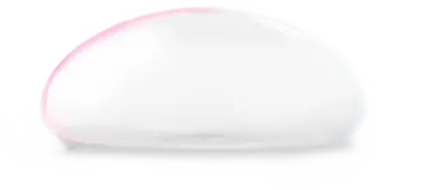
Motiva Ergonomix implants are dynamic-fluid-gel implants engineered to change shape naturally in response to body position and movement. When lying down, the implant spreads softly across the chest; when standing, it is designed to settle toward a teardrop silhouette, aiming for a profile closer to natural breast tissue rather than a fixed dome shape.

The internal ProgressiveGel Ultima is soft and elastic, so it is often considered for patients with thin skin or limited soft-tissue coverage. Implant edges can still be felt or seen where the covering tissue is thin, and how much varies from person to person.

A six-layer TrueMonobloc shell combined with Motiva's BluSeal barrier technology is designed to help reduce the risk of gel bleed and capsular contracture. Motiva also offers an optional Q Inside Safety Technology, a passive identification microtransponder that lets clinicians retrieve implant manufacturing data non-invasively at future follow-ups, which is valuable for international patients who may have post-op care abroad.

Mentor MemoryGel BOOST

Mentor MemoryGel BOOST

(Mentor MemoryGel BOOST)

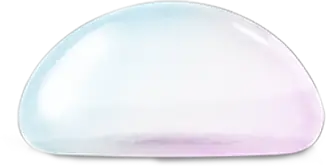
Mentor MemoryGel BOOST is an evolution of the Mentor line, refined to rebalance shape retention and tactile feel. A 1:1-ratio high-viscoelastic crosslinker silicone gel produces a firm, anchored feel; meaningfully better décolletage (upper-pole) volume; a more refined upper-to-lower pole transition; and reduced rippling along the implant edge. These address the most common complaints patients raise about earlier-generation cohesive implants.

This design is particularly suited to patients with limited décolletage volume, slim frames where a softer implant would lose definition, or anyone who prefers a firmer, more shaped result with a controlled silhouette. Mentor's MemoryGel line also has long-term FDA core study data that patients can review when comparing implant brands across different markets.

Mentor MemoryGel Xtra (Smooth)

Mentor MemoryGel Xtra (Smooth)

(Mentor MemoryGel Xtra)

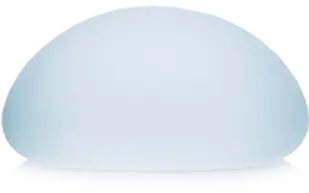
Mentor MemoryGel Xtra Smooth offers a polished shell surface and a softer, more natural feel on placement than textured-surface alternatives. The smooth surface lets the implant move against the surrounding tissue rather than adhering to the capsule, and it aims for a supple line and soft feel at rest and in motion.

Xtra Smooth is best suited to patients with sufficient soft-tissue coverage who prioritize naturalness and comfort over maximum projection. It is also a strong revision-implant choice when a textured-surface implant is being exchanged for a softer feel. This is a common discussion with patients who initially chose firmer implants and now want a more natural result.

SAFETY CHECK

Implant Safety & Screening

After implant placement,

After implant placement,

routine breast screening remains possible, including ultrasound and mammography.

Mammograms and breastfeeding

Mammograms and breastfeeding

Implants can hide some breast tissue on a mammogram, so tell the imaging center about them when booking. Breastfeeding is often possible, though milk supply can be affected.

Rupture status can be assessed by ultrasound.

Rupture status can be assessed by ultrasound.

For silicone gel implants, the FDA recommends imaging to screen for silent rupture starting 5–6 years after surgery and every 2–3 years thereafter.